A bedroom blind has one main job. It needs to keep light out while you sleep and let it back in when you wake. Choose badly and you end up with a glowing frame of light round the window at 5am in June, or a room that feels cold and gloomy all winter.
This roller blind bedroom buying guide takes you through the choices that matter most: fabric, blackout level, fitting position, controls and style. If you want to see and feel fabrics before you decide, the Holcombe Interiors showroom at Pendle Village sits inside our restored Victorian cotton mill, just off Junction 12 of the M65 near Burnley.
Why a Roller Blind Works Well in a Bedroom
Roller blinds sit close to the glass and roll away into a slim tube at the top of the window. They take up no floor space, which matters in a small bedroom where a wardrobe or bedside table sits near the window. They also pair well with curtains, so you can layer the two for extra darkness and warmth.
They are simple to use and easy to keep clean. Most fabrics only need a wipe or a light run over with the vacuum brush. Compared with vertical or Venetian blinds, a roller blind gives you one flat panel of fabric, so light has fewer gaps to creep through.
When a Different Window Covering Might Suit You Better
Roller blinds do not suit every window. A large bay often looks better dressed with shutters or full-length curtains. If you want to tilt the light without raising the blind, slatted Venetian or vertical blinds give you that control. You can compare all three options on our curtains, blinds and shutters page.
Blackout, Dim-Out or Light Filtering: Which Fabric Do You Need?
The fabric decides how dark your bedroom gets at night and how bright it feels by day. Most roller blind ranges fall into three groups, and each suits a different kind of sleeper.
Blackout Fabric
Blackout fabric has a coated backing that stops light passing through the material. It is the best choice for children’s rooms, shift workers and anyone who wakes with the sun. In Lancashire the sun rises before 5am in late June, so a blackout blind makes a real difference on those early summer mornings.
Keep in mind that blackout fabric only blocks light coming through the fabric itself. Light can still leak around the edges of the blind. We cover how to reduce those gaps further down this guide.
Dim-Out Fabric
Dim-out fabric cuts most light but not all of it. Your room stays dim rather than pitch black. Many people prefer this in a main bedroom because it softens harsh morning light without making the room feel like a cave at midday.
Light-Filtering Fabric
Light-filtering fabrics give you privacy while letting soft daylight through. They suit guest rooms, dressing areas or a bedroom that already has thick lined curtains. On their own, they will not help much if you are a light sleeper.
Thermal Fabrics for the Colder Months
October is when many homes in Pendle and the Ribble Valley switch the heating back on. Windows are one of the main places a room loses warmth, especially in older stone terraces with single-glazed or draughty frames. Some blackout and dim-out fabrics come with a thermal backing that helps hold heat in on cold nights.
A thermal roller blind works best when it fits snugly inside the window recess. Pair it with lined curtains and you add a second barrier between the cold glass and your bed. If you are thinking about curtains as well, you can look at made-to-measure curtains during the same showroom visit.
Choosing Colour and Pattern for a Calm Bedroom
A bedroom blind is a large block of colour, so choose it with your bedding, walls and flooring in mind. Soft neutrals such as stone, oatmeal and warm grey sit quietly in most rooms. They also look tidy from the street, which matters if your bedroom faces the road.
If you want more character, try a muted pattern or a textured weave. A linen-look fabric adds interest without fighting your duvet cover. Deeper shades like navy, forest green or charcoal suit a cosy, cocooning room and hide marks well.
Match the Blind to Your Bedding
One easy trick is to pick a blind that echoes a colour already in your bedding or cushions. Bring a pillowcase or a cushion cover with you when you visit, or browse our bedding shop near Burnley and plan the whole room in one trip. Lighter shades help a small room feel more open, and our guide on making a small bedroom feel bigger has more ideas on colour and light.
Inside Recess or Outside Recess Fitting
Before you choose a size, decide where the blind will sit. This one choice affects how much light gets in, how the window looks and how much of your windowsill you can use.
Inside the Recess
An inside recess blind sits within the window opening. It looks neat and keeps a deep windowsill free for plants, photos or a reading lamp. The trade-off is a small gap at each side, because the roller mechanism needs a little room to turn.
Outside the Recess
An outside recess blind fixes to the wall above the window and overlaps the frame on each side. That overlap blocks more light around the edges, so it suits anyone who wants a truly dark bedroom. It can also make a small window look larger. Check that window handles and sills will not catch the fabric as it rolls down.
Reducing Light Gaps
If you want an inside recess fit with very little light leakage, ask about side channels. These are slim tracks fitted down each side of the window, and the fabric runs inside them. Layering the blind with blackout-lined curtains is another reliable fix.
Measuring Your Window: The Short Version
Accurate measuring decides whether a blind fits cleanly or leaves gaps and catches on the frame. Use a steel tape measure rather than a fabric one, and record every figure in millimetres.
For an inside recess blind, measure the width at the top, middle and bottom of the recess and use the smallest figure. Measure the drop on the left, centre and right in the same way. For an outside recess blind, add a few centimetres of overlap on each side so the fabric covers the edges of the frame.
We have already published a full step-by-step guide on how to measure roller blinds. It focuses on kitchens, but the same method works for any window in your home. If you would rather leave it to someone else, a made-to-measure roller blind takes the guesswork out of sizing.
Controls and Child Safety
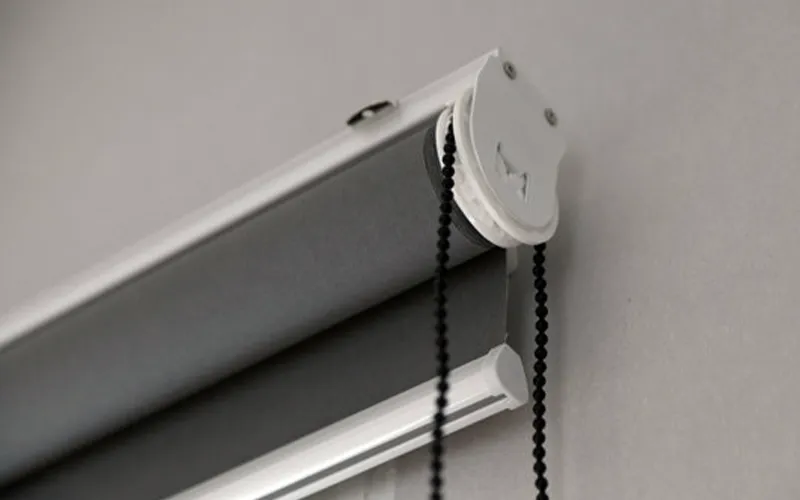
Most roller blinds use either a side chain or a spring mechanism. A chain gives smooth, controlled lifting and suits wider, heavier blinds. A spring blind has no chain at all: you pull the bottom bar down, and a gentle tug sends it back up.
In a child’s bedroom, safety comes first. Blinds sold in the UK must meet safety standards for looped cords and chains, which usually means a chain tensioner or a cordless design. Always fix the tensioner firmly to the wall, and keep cots, beds and climbable furniture away from the window.
Motorised Roller Blinds
Motorised blinds open and close with a remote, a wall switch or an app. They suit hard-to-reach windows, such as a high window above the bed, and remove cords from the room completely. They cost more than manual blinds, so they make most sense where reach or safety is a real concern.
Should You Pair a Roller Blind With Curtains?
Many bedrooms work best with both. The blind handles light and privacy, while curtains bring warmth, softness and a finished look. A blackout roller blind behind lined curtains gives you the darkest and warmest result of all.
If you layer the two, fit the blind inside the recess and hang the curtain pole wider and higher than the window. The curtains can then stack back off the glass during the day, so you keep as much daylight as possible.
See Bedroom Blinds in Person at Pendle Village
Fabric is hard to judge on a screen. Colours shift under different light, and a photo cannot show you the weight of a blackout backing. Seeing samples in person helps you avoid a costly mistake.
The Holcombe Interiors showroom sits inside Pendle Village, Hollin Bank, Brierfield, Nelson BB9 5NG. You will find curtains, blinds and shutters under one roof, with beds, bedding and bedroom furniture in the same mill. We are open seven days a week, with free parking for over 120 cars and a Café Tearoom for a break between decisions. Plan your trip with our directions to Pendle Village.
Frequently Asked Questions
What is the best roller blind for a bedroom?
For most bedrooms, a blackout roller blind fitted outside the recess gives the best result. The fabric blocks light, and the overlap cuts gaps at the edges. If you prefer a softer morning glow, choose a dim-out fabric instead.
Do blackout roller blinds make a room completely dark?
Not always. The fabric stops light passing through, but some can still leak around the sides, especially with an inside recess fit. Side channels, an outside recess fit or lined curtains on top will get you much closer to full darkness.
How do I measure a window for a roller blind?
Measure the width and the drop in three places with a steel tape, and use the smallest figures for an inside recess fit. Our step-by-step guide on measuring for roller blinds explains each stage in detail.
Where can I buy made-to-measure blinds near Burnley?
You can see roller blind fabrics at the Holcombe Interiors showroom inside Pendle Village, just off Junction 12 of the M65 in Brierfield. Visit our made-to-measure blinds page for details, or call Holcombe Interiors on 01282 442 408.