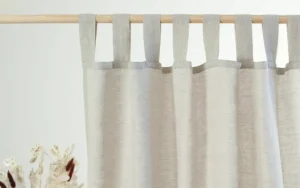
Some windows need more thought than others. A bay has corners to negotiate. Patio doors need to open without catching the fabric. Dormer windows offer very little space, while arches and sloping roof panes rarely suit a standard blind.
The answer is not simply to choose the curtain or blind you like best. The window shape, available fixing space, handles, radiators and direction of opening all have to be considered first. Once those practical points are understood, the right options become much clearer.
This guide explains what tends to work well for bay windows, patio and French doors, dormers, conservatories and other unusual windows. For advice on your own room, you can compare made-to-measure curtains, blinds and shutters at Pendle Village.
How to dress a bay window
A bay is made up of several window sections meeting at different angles. Any curtains fitted within it need to travel around those corners, while blinds and shutters must be positioned so they do not collide with one another or obstruct handles.
Curtains for bay windows
Bay windows normally require a made-to-measure or suitably formed track. Depending on the shape of the bay, this may be a specialist track bent to follow the angles or a system designed with corner sections and gliders that travel smoothly around them.
A bay pole is another option when you want the hardware to remain visible. However, the brackets and corner joints need to be chosen carefully because some arrangements prevent curtain rings from passing the supports. A professional survey will establish where the curtains can travel and where they will need to stack.
Curtains can draw to the outer edges of the bay, to several chosen positions or beyond the bay onto the adjoining walls. The best arrangement depends on the window, the track and the amount of space available for the fabric when open. If there is very little stacking space, part of the glass will remain covered.
Full-length curtains often make a bay feel taller and more complete, although sill-length curtains may be more practical where there is a window seat, fitted furniture or a radiator. Floors in older properties are not always level, so the finished drop should be checked at several points rather than measured in one place.
Blinds and shutters for bay windows
Fitting a separate blind to each section is often the neatest way to dress a bay. Each blind operates independently and there is no need for one product to turn the corners.
Careful measuring is still essential. Adjacent blinds need enough clearance to avoid touching at the angles, and the brackets must not prevent the windows from opening. Handles, vents and the depth of the recess can all affect the final position.
Made-to-measure shutters are also well suited to many bay windows. Their frames can be designed around the individual sections and angles, providing privacy and adjustable light control without large folds of fabric. Bay angles are rarely as exact as they appear, which is why a detailed survey matters.
Another effective approach is to use blinds or shutters within the bay for privacy and light control, then add made-to-measure curtains for bay windows at the outer edges. This creates a softer, more layered finish without asking a single product to do everything.
How to dress patio doors and French doors
Wide areas of glass bring three practical considerations: the width of the opening, the space needed when the window covering is open and the movement of the doors themselves.
Sliding patio doors
Vertical blinds remain a practical choice for many sliding patio doors. They cope well with wide openings, allow flexible control of light and privacy, and can be drawn to one side or split in the centre to suit the direction in which the doors are used.
Curtains can give a softer and more luxurious result, but they need enough space to stack clear of the opening. There is no reliable fixed allowance, such as 60cm on each side, because the stack depends on the curtain width, fabric, lining and heading. The track should be planned with the finished curtain in mind and extended beyond the frame wherever the wall space allows.
For very wide doors, it may also be worth discussing panel blinds or more than one roller blind. Dividing a wide span can make the blinds easier to operate, although the joins should be positioned so they work with the door divisions rather than cutting awkwardly across the glass.
French doors
French doors can often take blinds fitted directly to each glazed door, allowing the blind to move with it. Clip-in systems such as Perfect Fit may be suitable where the door construction, glazing beads and clearances are compatible, but they are not appropriate for every frame.
Curtains are another option. The track or pole should be fitted high and wide enough for the fabric to clear the doors when they open. Door handles, hinges and whether the doors open inwards or outwards must all be checked before deciding where the curtains will sit.
How to dress dormer windows
Dormer windows often sit within a narrow recess with sloping ceilings at either side. This leaves little or no wall space for conventional curtains to stack.
A blind fitted neatly inside the recess is usually the simplest answer. Roller, Roman and pleated blinds can all work, depending on the available depth, the way the window opens and whether blackout or privacy is the priority.
For a softer look, narrow dress curtains can be added at the sides without being expected to close across the window. In the right dormer, swing-arm curtain rods can also work: the curtain hangs from a hinged arm that moves away from the glass when open. The fixing surface and available side space need to be strong enough for the weight of the curtain.
Conservatories and roof windows
Conservatories can become very warm in direct sunlight and lose heat quickly when the temperature falls. Blinds can improve comfort, privacy and glare control, although they are not a substitute for high-performance glazing or proper insulation.
For conservatory side windows, close-fitting pleated, cellular or roller blinds are common choices. A bead-mounted system may be suitable for compatible glazed panels because the blind remains close to the glass and moves with an opening window or door.
Sloping roof panes need a blind designed to remain under tension or run within side channels. An ordinary free-hanging blind will fall away from the glass. Roof blinds are specialist products, and accurate measuring is particularly important where several panes meet.
Fabric and material choice also matters. Strong sunlight can affect colours and finishes over time, so ask about suitability for intense light and heat before selecting a dark or richly coloured material. Solar-reflective and cellular options may help manage glare and temperature more effectively.
Solutions for other awkward windows
A radiator beneath the window
Long curtains hanging over a working radiator can trap heat between the curtain and the glass rather than allowing it to circulate into the room. A blind, sill-length curtain or curtain finishing safely above the radiator may be more practical.
The correct clearance depends on the radiator, its output and the curtain fabric, so avoid relying on a standard gap such as 2cm. The position of thermostatic valves and any guidance from the radiator manufacturer should also be considered.
Very little wall space at the sides
Where curtains cannot stack clear of the glass, consider a neat wave heading or another arrangement calculated to reduce the finished stack. The result will still depend on the fabric, lining and total width, so no heading guarantees a narrow stack in every room.
A blind fitted within the recess is often the cleaner solution. A single decorative curtain at one side can then soften the window without taking up valuable space on both sides.
Arched and shaped windows
An arch or unusually shaped window is often an architectural feature worth preserving. Depending on the shape and the level of light control required, possible solutions include shaped shutters, shaped Venetian blinds, specialist pleated blinds or a covering made for the rectangular section beneath the arch.
Curtains can sometimes be positioned above the entire opening, but this hides the shape when they are closed. If the arch is the feature, leaving its upper section visible and dressing the lower part may produce a better result.
Converted mills, chapels and older properties around Lancashire often have windows that are not perfectly symmetrical. A template or detailed survey may be needed because small differences in the curve or angle can affect the fit of a shaped product.
Windows positioned off-centre
A track or pole can sometimes be extended further on one side to create better visual balance and provide useful stacking space. The aim is not necessarily to centre the hardware on either the window or the wall, but to make the finished arrangement look deliberate within the room.
A pelmet, discreet ceiling-fixed track or pair of dress curtains can also help disguise an uneven arrangement. The best approach depends on nearby furniture, corners and available fixing points.
Tall windows and mill conversions
Tall windows create a substantial weight of fabric, particularly when the curtains are lined or interlined. The track, brackets and fixings must be specified for the load and fixed into a suitable surface.
Ceiling fixing may be useful where there is limited wall space above the frame. It is also worth considering operation and maintenance: a hand-drawn curtain may be awkward on a very tall window, while a draw rod, corded system or motorised track can make daily use easier.
What to do before arranging a survey
Take several photographs showing the full window and the wall, floor and ceiling around it. Include anything that may affect the installation, such as radiators, handles, vents, sockets, furniture and the direction in which doors or windows open.
Approximate measurements and photographs are often enough for an initial discussion or budget estimate. The final order should be based on an accurate survey, particularly for bay angles, shaped frames, sloping ceilings and openings that are not square.
Think about the whole room as well as the window. The position of your living room furniture may determine where curtains can stack, whether doors remain accessible and how much daylight you want to retain.
Frequently asked questions
Can one pair of curtains cover an entire bay window?
Yes, provided the track, gliders and supports are designed to carry the curtains around the bay. A pair drawing to the outer edges works well in many rooms, but it is not the only arrangement. The available stacking space, number of corners and position of the supports will determine whether one pair or several curtain sections will work best.
What is the best blind for a sliding patio door?
Vertical blinds are a practical and economical choice for many sliding patio doors because they suit wide openings and can stack towards the side used least often. Panel blinds and carefully divided roller blinds may also be suitable. The best choice depends on the width, door configuration and the space available beside the glass.
Do bay windows need a special curtain track?
Usually. The track must follow the shape of the bay and allow the curtains to move past the corners and, where required, the support brackets. Some bays can use a flexible or bendable track, while others need a made-to-measure metal system. The weight of the finished curtains will influence the choice.
Can awkward windows be measured without a home visit?
Photographs and approximate dimensions can be used for an initial conversation and may be enough to provide a guide price. A final survey is strongly recommended before manufacture because bay angles, out-of-square reveals, sloping floors and restricted fixing points cannot always be judged accurately from photographs.
You can visit the Pendle Village showroom in Brierfield to compare suitable products and fabrics before arranging the survey.
What is the best option for an arched window?
That depends on whether you want to cover the whole arch or keep it visible. Shaped shutters, Venetian blinds and specialist pleated blinds may follow the opening, while a blind or curtain fitted below the curved section can preserve the arch as a feature. An accurate template or survey is normally required for anything made to the shape.
Expert help with unusual windows
Awkward windows rarely need an elaborate solution, but they do need the right one. The product must suit the shape of the opening, operate without obstruction and leave enough space for doors, handles and fabric to move properly.
Visit the curtains, blinds and shutters department at Pendle Village in Brierfield, near Burnley, to see the options and discuss your window before arranging a survey. Getting the practical details right at the beginning makes all the difference to the finished result.