The heading is the top section of a curtain. It determines how the fabric falls, how the curtains open and close, and whether they hang from a track or a pole. It also affects the amount of fabric required, so your choice of heading can make a noticeable difference to the finished price.
It is best to consider the heading, fabric and window together. A style that looks beautiful in a photograph may not be the right choice for a narrow window, a shallow recess or a fabric that does not drape particularly well.
Pencil pleat, eyelet, wave and pinch pleat are four of the most popular curtain headings in the UK. Each creates a different look and has its own practical advantages. Here is how they compare, and what to think about before placing a made-to-measure order at our curtains, blinds and shutters showroom.
What does a curtain heading do?
A curtain heading shapes a flat width of fabric into a series of folds or pleats. The amount of fabric used in relation to the width of the track or pole is known as fullness.
For example, curtains made at twice fullness use approximately twice the width of the track or pole before the fabric is gathered or pleated. The exact calculation also needs to allow for hems, joins, pattern matching and the way the curtains meet in the centre.
Fullness matters because it gives curtains their depth and shape. Too little fabric can leave them looking flat and sparse, while the right amount creates fuller, more even folds. In many cases, a well-chosen fabric made with suitable fullness will look better than a more expensive fabric used too sparingly.
The heading also affects the stack back: the space occupied by the curtains when they are fully open. This is particularly important where there is limited wall space beside the window or where you want to expose as much glass as possible.
The four main curtain heading styles
Pencil pleat curtains
Pencil pleat is a traditional and highly versatile heading. A sewn-in tape is pulled to gather the fabric into narrow upright folds, giving the appearance of a row of pencils.
The heading uses curtain hooks and can be fitted to either a track or a pole with rings. Most pencil pleat tape has several rows of hook pockets, allowing the hanging height to be adjusted slightly during fitting. This can be useful where a floor or windowsill is not perfectly level.
Pencil pleat curtains are generally more economical to make than hand-finished pleated styles. They work in traditional and modern rooms, making them a dependable choice for living rooms, bedrooms and dining rooms.
Best suited to: homeowners looking for a versatile, practical and cost-effective heading that works with most curtain fabrics.

Eyelet curtains
Eyelet curtains have metal rings set directly into the top of the fabric. The pole passes through the rings, creating broad, even folds with a relaxed contemporary appearance.
Because the pole remains visible between the eyelets, its colour and finish form part of the overall design. The internal diameter of the eyelets must also be suitable for the pole so the curtains move smoothly.
Eyelets are designed for poles rather than tracks. They are simple to use and work particularly well with plain fabrics and bold patterns, but they need enough clearance above the pole for the fabric heading. They may therefore be less suitable where space above the window is restricted.
Best suited to: modern rooms where the pole is intended to be part of the finished look.
Wave curtains
Wave curtains create a continuous, soft S-shaped fold from the top of the curtain to the hem. There are no visible gathered sections or fixed pleats, giving the curtains a clean and understated finish.
This heading requires a compatible wave track with gliders spaced at fixed intervals. It cannot normally be hung successfully from a standard curtain track without changing the track or its components.
Wave curtains can stack back neatly and work particularly well across wide or floor-to-ceiling windows. The result depends heavily on the fabric: materials with a soft, fluid drape usually form the most attractive and consistent waves.
Best suited to: contemporary interiors, wide windows and rooms where a clean architectural line is important.
Pinch pleat curtains
Pinch pleat curtains have groups of pleats sewn permanently into the heading. Double pinch pleat is smart without feeling overly formal, while triple pinch pleat creates a fuller and more traditional finish. Goblet pleats are more decorative and tend to suit formal rooms or period interiors.
Unlike pencil pleat, the gathers are fixed in place and do not need to be adjusted when the curtains are hung. Pinch pleats can be used with a suitable track or with a pole and rings.
This is a tailored heading that involves more detailed making, so it normally costs more than pencil pleat. It works especially well with fabrics that have enough body to hold the pleats and can look particularly impressive with lined or interlined curtains.
Pinch pleat curtains may take up more space when open, so the available wall area on either side of the window should be considered before ordering.
Best suited to: elegant living rooms, dining rooms, period properties and interiors where a more tailored finish is wanted.
These heading styles can be discussed as part of a made-to-measure curtains consultation. The amount of fabric, type of lining, chosen heading and complexity of the make will all influence the quotation, so it is worth comparing suitable options before deciding.
What about tab top and slot top curtains?
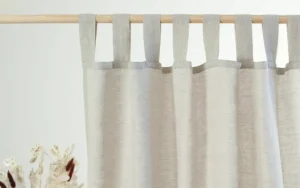
Tab top curtains hang from fabric loops sewn across the top and are threaded directly onto a pole. They create a relaxed, informal look but do not always glide easily, so they are often better where the curtains will not be opened and closed several times a day.
Slot top curtains, also known as rod pocket curtains, have a channel through which a slim pole or rod is passed. They are commonly used for voiles, nets and lightweight decorative panels. As the fabric grips the rod, they are usually more suitable for fixed or occasionally moved panels than for everyday working curtains.
Both styles are widely found in ready-made ranges. For made-to-measure curtains that will be used regularly, one of the four main headings will usually offer a more practical and polished result.
Should you choose a curtain track or pole?
The heading and the hardware need to be chosen together:
- Eyelet curtains require a pole.
- Wave curtains require a compatible wave track.
- Pencil pleat and pinch pleat curtains can usually be fitted to either a suitable track or a pole with rings.
Tracks are often the practical choice for bay windows, ceiling fixing and heavier curtains. They can also be discreet, allowing the fabric to remain the main feature.
Poles are a more visible part of the room and are available in a wide choice of finishes and finials. They work well on straightforward windows where there is enough space above the frame and the hardware complements the rest of the interior.
Position matters too. Taking curtains higher and wider than the window can make the opening appear larger, reduce the amount of glass covered when the curtains are open and help limit light gaps. The most suitable position will depend on the wall, ceiling, window and chosen heading.
Matching the heading to the room
Living rooms
Wave and pinch pleat headings both give a considered, high-quality finish. Wave works well in cleaner, more contemporary rooms, while pinch pleat brings more structure and formality. If you are furnishing the room as a whole, it helps to compare the curtains with your preferred living room furniture so the proportions, colours and overall style work together.
Bedrooms
Pencil pleat is a practical and versatile choice, particularly when paired with blackout lining. The adjustable hook position can also help achieve a tidy finish above a windowsill or floor.
Modern flats and new-build homes
Wave curtains suit large areas of glass and can create a neat, uniform line when fitted to a ceiling-mounted or discreet track. Their compact, orderly folds are useful where the curtains need to sit neatly when open.
Cottages and period homes
Pencil pleat works well on smaller windows and can feel comfortably traditional without becoming too formal. Double or triple pinch pleats are also well suited to period interiors where the window and available wall space are large enough to carry the fuller look.
Dining rooms and hallways
Where curtains are mainly decorative, pencil pleat offers a smart finish at a sensible cost. Pinch pleat may be worth considering when the window is intended to become a stronger feature of the room.
Nurseries and children’s bedrooms
A well-fitted track can allow curtains to extend above and beyond the frame, helping to reduce light around the edges when used with blackout lining. Any operating cords or chains must be specified and fitted with child safety in mind.
Practical points that are easy to overlook
Allow enough stack-back space
Measure the available wall on both sides of the window. Curtains that cannot move clear of the glass will reduce daylight even when fully open.
Match the heading to the fabric
Wave and eyelet headings usually look best in fabric with a good drape. Pinch pleats benefit from fabric with enough weight and body to hold their shape. A specialist can help you judge this from a full-length display more accurately than from a small sample.
Think about pattern placement
Large patterns and strong vertical designs need careful positioning across joins and pleats. The heading changes how much of the pattern is visible when the curtains are both open and closed.
Ask how the curtains are removed
Pencil pleat and pinch pleat curtains unhook from their track or pole rings. Eyelet curtains require the pole to be released so they can slide off. Wave curtains detach from their track gliders. It is worth knowing what is involved before ordering, especially with tall or particularly heavy curtains.
Frequently asked questions
Which curtain heading is the least expensive?
Pencil pleat is usually the most economical made-to-measure option because the heading tape is straightforward to work with and the making process is less involved than a hand-finished pinch pleat. The overall price will still depend on the fabric, lining, size, pattern repeat and fullness required.
Can the heading on existing curtains be changed?
Sometimes. Pencil pleat tape can often be replaced, and other alterations may be possible if there is enough fabric in both the width and the drop. Converting existing curtains to eyelet or wave is less straightforward because these headings have specific fabric and hardware requirements. The curtains should be assessed by a workroom before any alteration is agreed.
How much fullness should curtains have?
There is no single figure that suits every heading and fabric. Around twice fullness is common for pencil pleat, while wave and pleated headings are normally calculated according to the chosen system, style and finished appearance. A made-to-measure adviser should calculate this as part of the order rather than relying on a rough rule alone.
Which curtain heading is best for a large window?
Wave is a popular choice for wide and floor-to-ceiling windows because it creates a clean run of even folds and can stack neatly. Pinch pleat is another strong option when a fuller, more tailored look is wanted and there is enough room for the curtains to stack at each side.
Can I see the different headings before ordering?
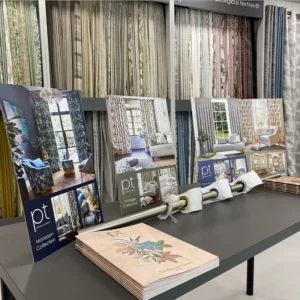
Yes. Seeing full-size examples makes it much easier to compare the shape, depth and overall character of each heading. Pendle Village has more than 20 departments under one roof in a restored Victorian mill in Brierfield, near Burnley, so you can compare curtains with furniture, flooring and other finishes during the same visit.
Find the right curtain heading at Pendle Village
The best heading is not simply the one you like most in a photograph. It is the one that suits your fabric, window, existing hardware and the way you want the room to feel.
Visit the curtains, blinds and shutters department at Pendle Village to see the different headings made up, compare fabrics and discuss the practical details before you order. A little thought at this stage makes a considerable difference to how the finished curtains look and perform.