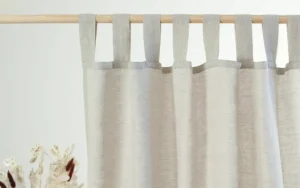
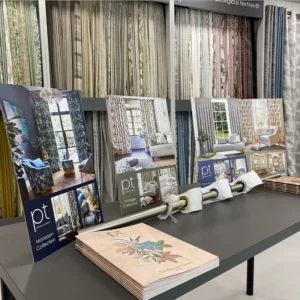
Ready-made curtains are usually less expensive, available immediately and perfectly suitable for many standard windows. Made-to-measure curtains are designed around your actual track or pole, your preferred finished drop and the way you want the fabric to hang.
That does not mean every important room needs bespoke curtains or that ready-made automatically looks cheap. The right choice depends on the proportions of the window, the sizes available, the fabric quality and how precise you want the finished result to be.
Many homes use both. Ready-made curtains may be ideal for a spare bedroom or rental property, while made-to-measure curtains can solve a bay window, unusual drop or large patterned design. At the curtains, blinds and shutters department at Pendle Village, you can compare the two approaches and decide where a bespoke finish will make a worthwhile difference.
What are ready-made curtains?
Ready-made curtains are manufactured in a set range of widths, drops, fabrics and headings. You choose the closest suitable size, take them home or order them for delivery, and hang them without waiting for a workroom to make them.
Common UK widths include approximately 117cm, 168cm and 228cm, traditionally described as 46, 66 and 90 inches. Common drops include approximately 137cm, 182cm and 229cm, although longer sizes are increasingly available. Exact ranges vary by retailer and design.
Curtains are frequently sold as a pair, with the stated width referring to each curtain, but this should always be checked on the packaging. The quoted width is normally the flat fabric width before it is gathered or arranged into folds. To avoid a sparse result, the combined width of the pair must provide enough fullness for the pole or track.

Where ready-made curtains work well
Ready-made curtains are a sensible choice when:
- the window works with a standard width and drop;
- the existing pole or track is in a suitable position;
- you want a quick and affordable update;
- the room is likely to be redecorated again soon;
- you are furnishing a rented property; or
- you find a fabric and lining quality that suit the room.
Children’s bedrooms, spare rooms and straightforward new-build windows are common examples. A good-quality ready-made pair, chosen at the right size and hung well, can look smart and considered.
Where ready-made curtains can be limiting
The finished drop is often the first compromise. The nearest standard length may stop awkwardly above the floor or need shortening. Alteration is possible, but the cost should be added when comparing it with a made-to-measure quotation.
Width and fullness matter just as much. The total flat width of both curtains must be generous enough for the pole or track. If the curtains only just meet when closed, they will look stretched rather than falling into relaxed folds.
Pattern placement is another limitation. Ready-made curtains are cut efficiently to a standard size, so a large motif may not be centred exactly as you would choose. Pattern alignment between a pair can also vary by product.
Your heading and lining choices are restricted to those offered in the range. If you need a particular wave system, tailored pleat, specialist lining or exact stacking arrangement, ready-made curtains may not provide it.
What does made to measure mean?
Made-to-measure curtains are manufactured to the finished dimensions and specification agreed for your window. The measurements are normally based on the track or pole and intended hanging position rather than simply the width of the window frame.
You choose the fabric, heading, fullness, lining and finished drop. The workroom then calculates the number of fabric widths required, any pattern-matching allowance and the construction needed for the finished pair.
The result should be proportioned for the window and the chosen hardware rather than adapted from the nearest packet size.
Choosing the fabric
Fabric weight and composition affect the way curtains drape, stack and move. A heavier cloth can create more structured folds, but it may need stronger hardware and occupy more space when the curtains are open. A lighter fabric can feel softer and less formal, although very light cloth may need lining or interlining to give it sufficient body.
Natural fibres and loose weaves can behave differently from tightly woven synthetic or blended fabrics. An experienced adviser or curtain maker can explain whether the fabric is suitable for the intended heading, drop and level of daily use.
Take samples home whenever possible. Colour and texture can look completely different in natural light from the way they appear under showroom lighting. Check the sample in the room during the day and evening, and place it beside existing flooring and furniture.
If you are changing more than the window treatment, looking at living room furniture trends may help you decide whether the curtains should provide contrast or quietly support the rest of the room.
Choosing the lining
Lining gives curtains a more finished appearance, adds body and helps reduce the amount of light reaching the reverse of the face fabric. It cannot prevent every fabric from fading, but it offers more protection than leaving the curtain unlined.
Standard lining suits many living rooms and dining rooms. Blackout lining is useful in bedrooms and nurseries, although a blackout-lined curtain does not guarantee complete darkness because light can still enter above, below and around the sides.
Thermal or coated linings can improve comfort at the window, while interlining adds a soft layer between the face fabric and lining. Interlined curtains have a fuller, more luxurious drape and may provide additional insulation, but they are heavier and more expensive to make.
Ready-made and made-to-measure curtains compared
| Consideration | Ready-made curtains | Made-to-measure curtains |
| Initial cost | Usually lower | Usually higher |
| Availability | Often immediate | Made after the order is confirmed |
| Sizing | Fixed widths and drops | Made for the agreed pole, track and drop |
| Fabric choice | Limited to the stocked range | Much wider choice through fabric books |
| Headings | Usually pencil pleat or eyelet, with some other options | Pencil pleat, pinch pleat, wave and other tailored styles |
| Lining | Fixed by the product | Chosen for the room and fabric |
| Pattern placement | Determined during mass production | Calculated and matched by the workroom |
| Alterations | May be needed for the drop | Normally unnecessary if measured correctly |
| Best suited to | Standard windows and quick updates | Precise finishes, unusual windows and wider design choice |
How the costs compare
Ready-made curtains carry a single product price. Alterations, a new pole or track and fitting may still need to be added.
A made-to-measure quotation normally includes several elements: fabric, lining, making, heading and sometimes measuring, hardware and fitting. Suppliers structure their quotations differently, so check exactly what the total covers.
Pattern repeat can have a noticeable effect. Each fabric width must be cut so the design aligns across the joins and both curtains. With a large vertical repeat, every cut length may need to be increased to the next full repeat, adding several metres across a wide pair.
Made-to-measure is not automatically better value over time, and ready-made is not automatically disposable. Longevity depends on the quality of the fabric, lining, stitching and hardware, as well as sunlight, cleaning and daily use. Bespoke curtains do, however, offer more scope for future alteration or relining when the original materials remain in good condition.
Windows where made to measure often makes sense
Bay windows
A bay normally needs a suitable track or pole that follows its angles and allows the curtains to pass the corners. The curtains may be made as one pair or as several sections, depending on where they need to draw and stack.
Ready-made curtains are not impossible in every bay, but the standard widths and drops may make it difficult to achieve the right fullness and movement. A measured scheme is more likely to account properly for the corners, supports and available stacking space.
This is one reason people with older properties around Burnley, Nelson and the Ribble Valley consider made-to-measure curtains.
Windows with a radiator beneath them
Long curtains hanging directly over a working radiator can restrict heat circulation into the room. A blind, sill-length curtain or curtain finishing safely above the radiator may be more practical.
There is no universal gap such as 2cm that suits every installation. The appropriate clearance depends on the radiator, valves, fabric and guidance provided by the manufacturer. Made-to-measure curtains allow the finished drop to be set for the actual arrangement.
Tall, narrow or unusually positioned windows
Victorian sash windows, dormers, mill conversions and windows close to a corner often fall between standard sizes. Ceiling-fixed tracks and long drops also need accurate measurements and hardware capable of supporting the finished weight.
Made-to-measure curtains give more control over the proportions, stack position and exact hem level in these situations.
Large patterned fabrics
A bold design needs enough fabric for the pattern to be centred and matched across the pair. Bespoke making allows the workroom to plan the cuts rather than accepting wherever the motif falls within a standard production size.
Rooms requiring strong light control
Made-to-measure curtains can extend higher and wider than the opening and use an appropriate lining, helping to reduce light around the window. For the darkest result, the track position, overlap, returns and any accompanying blind are just as important as the lining itself.
A practical way to decide
Ready-made curtains are likely to be suitable when the available size gives enough combined width, the drop can be used or altered neatly, the fabric works in the room and you are happy with the supplied heading and lining.
Made-to-measure curtains are worth considering when:
- the window is unusually wide, tall or shaped;
- the exact hem position matters;
- the pole or track needs a tailored arrangement;
- you want a particular heading or fullness;
- the fabric has a large pattern repeat;
- you need a specific lining;
- the curtains will be a major feature of the room; or
- suitable ready-made sizes would still require significant alteration.
The decision does not have to be the same throughout the house. Spend where fit and finish matter, and use ready-made curtains where a standard size already does the job well.
Why seeing the fabric matters
Curtains are difficult to judge from a screen alone. Photographs cannot show the true weight, texture, opacity or movement of a fabric, and colours vary between devices.
At Pendle Village in Brierfield, near Burnley, you can handle fabric samples, compare lining choices and see how different headings hang before making a decision. Bring approximate measurements and photographs of the window for an initial discussion, then arrange a survey if the curtains are to be made for the space.
Frequently asked questions
How long do made-to-measure curtains take?
They normally take several weeks rather than several days, but the lead time depends on fabric availability, the workroom, the complexity of the curtains and the time of year. Ask for the current estimated completion date before paying a deposit, particularly if the curtains are needed for Christmas or another fixed occasion.
Can I use my existing curtain pole or track?
Often, yes, provided it is securely fixed, correctly positioned and suitable for the width and finished weight of the curtains. Heavy lined or interlined curtains may require stronger hardware or additional support.
Take photographs of the complete pole or track and its brackets when you visit, or contact the team before ordering.
Are made-to-measure curtains worth it in a rented home?
It depends on how long you expect to stay and whether the curtains could move with you. Ready-made curtains are usually the lower-risk option, but made-to-measure may still be worthwhile for an unusual window, a long tenancy or a room where light control is particularly important. Check the tenancy agreement before changing poles, tracks or fixings.
What is the difference between pencil pleat and eyelet curtains?
Pencil pleat uses gathered heading tape and curtain hooks. It can hang from a track or from a pole with rings. Eyelet curtains have metal rings fitted into the heading and slide directly onto a pole, creating broad, even folds. Eyelets need a compatible pole and cannot hang from a standard curtain track.
Can ready-made curtains be altered?
Yes. They can often be shortened, and some can be narrowed or relined. The fabric, heading and construction determine what is practical. Obtain an alteration price before buying, because extensive work can significantly reduce the saving compared with made-to-measure curtains.
Choose the option that fits the window and the room
Ready-made curtains are quick, affordable and entirely appropriate when a standard size works. Made-to-measure curtains offer more control over fit, fullness, fabric, lining and the finished appearance.
The best choice is the one that solves the window properly without paying for detail the room does not need. Visit Pendle Village to compare the materials in person and decide which rooms justify a tailored approach.